
Ad Ops Insights & Practical Frameworks
Yesterday's Revenue Dropped and Nobody Can Agree Why: Ranked Causes to Check First
When yesterday's publisher revenue drops and the team cannot agree why, run ranked causes before you rewrite floors or blame demand: inventory and traffic, auction and yield, creative or policy, partner delivery, then reporting clocks.

Private Auction Override Blocks (Sep 17, 2026): What Changed and What to Check in Google Ad Manager
As of September 17, 2026, Private Auctions respect publisher-level advertiser, brand, and buyer blocks by default. Here is how to find affected deals, decide Override vs leave blocked, and monitor delivery the morning after.
Ad Ops Headaches: Common Complaints on Both Sides of the Auction
Ad ops headaches look different on the sell-side and the buy-side, but they rhyme. Here is a practical map of the common complaints - and what to try first - from 19+ years in the operational layer.
GPT bfcache Auto-Refresh Is On by Default in 2026: What Publisher Ad Ops Should Check
Starting September 8, 2026, GPT automatically refreshes actively viewed ads on bfcache restore. Here is when to keep the default, how to opt out with AutoRefreshConfig, and what to check in Google Ad Manager.
How Publishers Should Evaluate Outside Ad Ops and Revenue Help
Part 2 of the Q&A with Aaron Foley. The questions publishers should ask before the SOW, where internal ownership has to stay, and why a revenue miss that looks like a sales problem often is not.

Ask Ad Manager Is Reactive. Here’s How to Stay Proactive on Under-Delivery & Revenue Leaks
Ask Ad Manager, Google’s Gemini agent inside GAM, is excellent at answering “why isn’t this line item delivering?” when you ask. It is not a daily monitoring system. This piece maps what it actually covers, the coverage gap it leaves for under-delivery and revenue movement, and the simple operating model that keeps both tools useful.

Digital Ad Trends August 2026: ChatGPT Ads Hit Europe, Publishers Fight the Bot Layer, Agentic Buying Leaves the Deck, and Public Ad Tech Goes Private
August 2026 was the month conversational ads left the lab, publishers started selling (and blocking) inventory aimed at machines, agentic buying moved from decks into live tests, and another public ad tech name headed off the market.
The Ad Ops Professional’s News Diet: How to Stay Current Without Drowning
Most ad ops professionals know they should stay current. Very few have a system that does not collapse under the weight of a normal GAM day. This is a practical news diet for people who live in the operational layer: which sources matter, how much time is realistic, why consistency beats intensity, and how to turn industry headlines into better daily decisions.
When Your Ad Ops Team Is Running Two Jobs: Direct-Sold + Programmatic at Volume
Most small publisher ad ops teams are quietly running two jobs. One is the direct-sold job: pacing, delivery commitments, advertiser communication. The other is the programmatic job: yield, fill, deal health, discrepancy chasing. When volume on both sides grows faster than headcount, the team does not get twice as busy. It gets a different kind of failure mode. This is the practical diagnosis of that problem and the coverage model that keeps both jobs from leaking.
How to Automate Google Ad Manager Reporting Without Building a Data Team
Most answers to "how do I automate Google Ad Manager reporting" treat it as a data-movement problem - scheduled exports, connectors, BigQuery, Looker. That gets the numbers out of GAM. It does not reduce the daily time spent reviewing and acting on them. This is the three-layer framework that separates export, pipeline, and judgment, so mid-size publisher teams can choose the right level of automation instead of building infrastructure they do not need.
The Publisher Ad Ops Audit: What to Examine, in What Order, and What to Do With What You Find
Most publisher ad ops teams know something in their setup is costing them money. Far fewer can say which thing, or what it would take to fix. That gap is what an audit closes. This is the methodology we use: the five areas worth examining, the order that keeps the work honest, what the findings usually look like once they're on paper, and how to turn a list of problems into a plan a team of two or three can actually finish. You can run it yourself. The framework matters more than who holds the clipboard.

The Q4-Ready Publisher: The GAM Checklist High-Performing Ad Ops Teams Run in August
Q4 is when publisher ad ops gets graded. CPMs peak, direct-sold commitments stack up, and every leak that was tolerable in July gets multiplied by the most valuable impressions of the year. The teams that have a great Q4 aren't the ones that hustle hardest in November - they're the ones that ran the readiness work in August and September, while there was still slack to fix what they found. Here's that checklist: inventory hygiene, pricing and floors, the direct-sold pipeline, and the detection layer - in the order to run it.

Put Your Ad Ops on Coordinator Duty: What Publisher Teams Should Steal from Engineering's On-Call Playbook
Engineering teams solved the always-on coverage problem decades ago: on-call rotations, a pager that only fires on real signal, runbooks that make any engineer effective at 3 AM, and postmortems that fix systems instead of blaming people. Publisher ad ops runs the same always-on risk - campaigns deliver seven days a week - with none of the machinery: everyone vaguely watching everything, detection by whoever happens to look. Here's the translation: how the on-call playbook maps to ad ops, and how a daily coordinator turns GAM coverage into a calm, one-person duty.

Ad Ops Consulting Services for Publishers: What's Included, How Engagements Work, and What to Ask Before You Sign
"Ad ops consulting services" covers everything from a two-week audit to embedded fractional leadership - and the industry is strangely quiet about what's actually inside the engagements. This is the practical guide: the six service areas that make up publisher ad ops consulting, how the three engagement models work (and roughly how they're priced), what deliverables you should expect at each stage, and the questions that separate a genuine operations partner from an hours-billing machine.

The $249 Decision That Gets Treated Like a $250,000 One: Why Publishers Under-Use the Easiest Adtech They've Ever Been Offered
A whole class of adtech now works like this: monthly terms, read-only integration, setup in under an hour, a real free trial. No dev roadmap, no annual contract, no switching costs. And publishers still evaluate it with the reflexes built for six-figure platform migrations - committees, quarters of deliberation, meetings that cost more than the tool. This is about where that reflex came from, what it quietly costs, the time-allocation audit that makes the cost personal, and the questions worth asking instead.

Digital Ad Trends July 2026: AI Search Chokes the Open Web, Publishers Sue Back, the Merger Machine Hits a Wall, and OpenAI's Ad Reality Check
July's four biggest stories all pointed the same direction: the ground under publishers is moving faster than ever. Ad supply fell as much as 40% as AI search choked open-web traffic, publishers escalated from complaints to lawsuits and honeypots, the M&A machine hit judicial and regulatory walls, and OpenAI's ad ambitions met a 90% reality check. Here's what it all means for the teams running the operational layer.

How to Set Up Daily Alerts from Google Ad Manager: Native Notifications, Scheduled Reports, and Monitoring Tools
There are three ways to get daily alerts from Google Ad Manager, and most publishers should use more than one: native email notifications (two minutes to set up, catches platform events), scheduled daily reports (ten minutes, delivers the numbers but not the judgment), and a dedicated monitoring layer (evaluates your numbers against baselines and only surfaces what needs attention). This guide walks the setup for each tier - and is honest about what each one can and cannot catch.
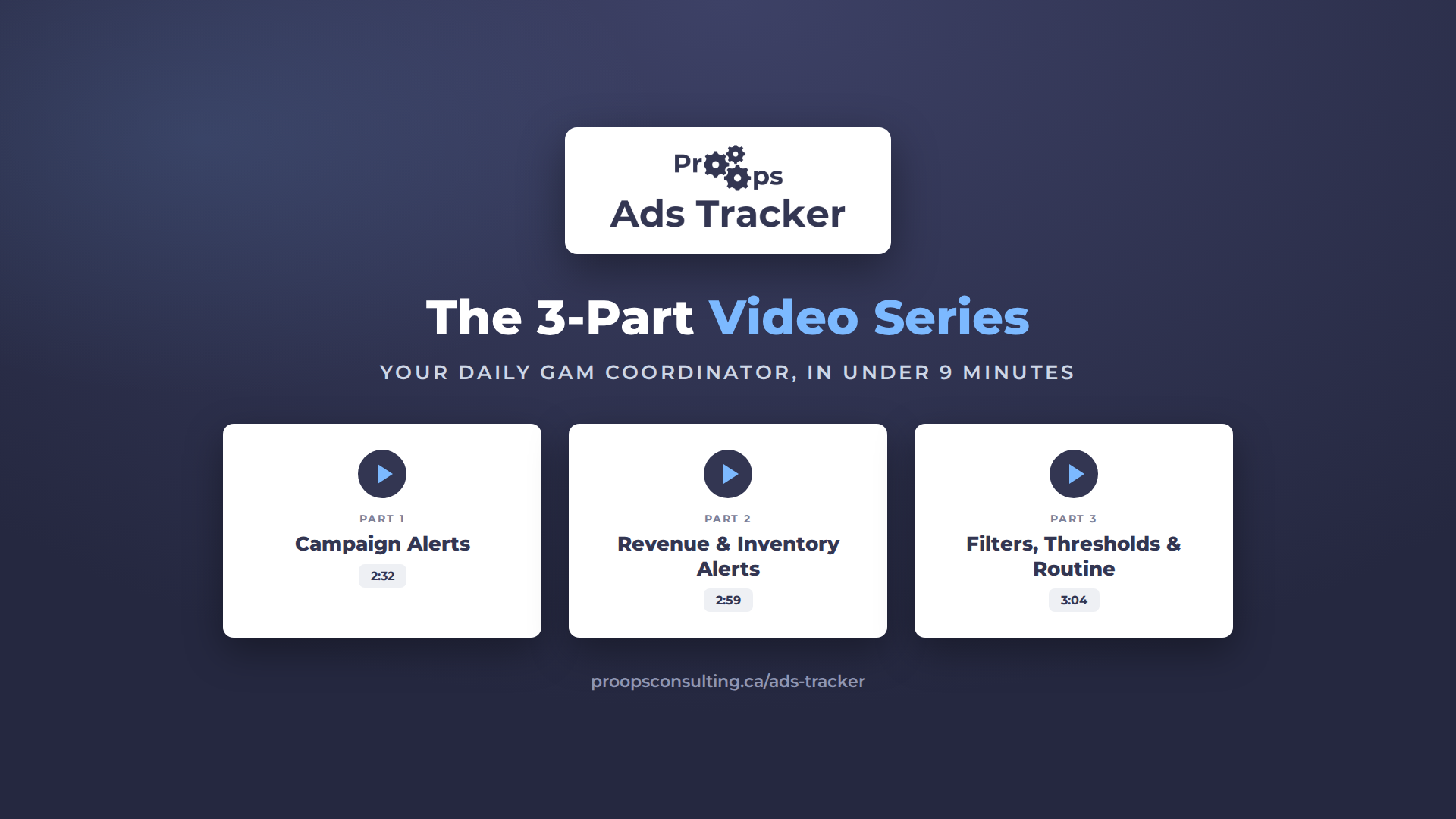
Watch: The ProOps Ads Tracker Video Series - Campaign Alerts, Revenue & Inventory, and Building Your Daily Routine
Reading about a tool tells you what it does. Watching it work tells you whether it fits your morning. We've produced a three-part video series on ProOps Ads Tracker - campaign alerts, revenue and inventory monitoring, and setting up the filters, thresholds, and routine that make it yours - each under three minutes, and the whole series shorter than the average morning GAM check it replaces.
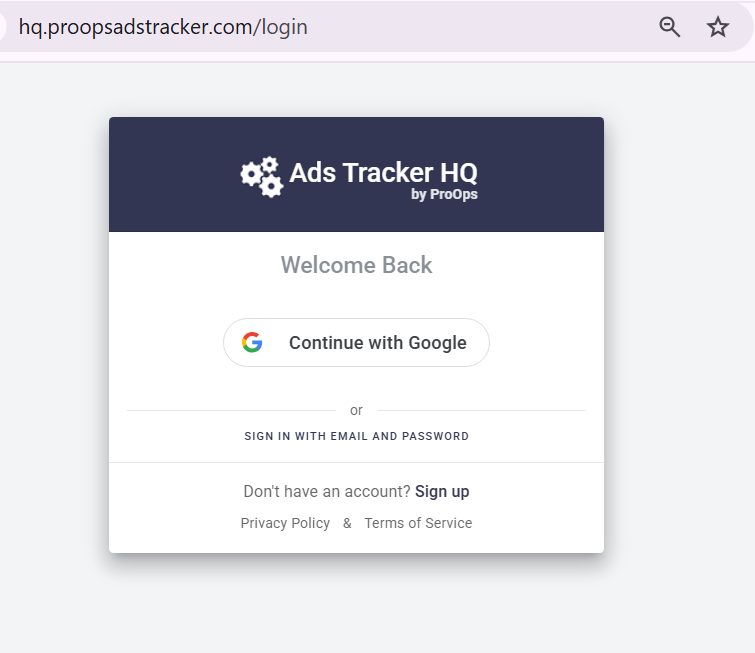
Alerts Catch What's Broken. Compliance Rules Will Catch Human Error: A First Look at What's Coming to Ads Tracker HQ
Daily alerts answer "is anything broken?" Compliance Rules will answer a different question: "is everything set up the way we agreed?" Here's a first look at what's coming to Ads Tracker HQ - self-defined rules for naming conventions, required assignments, and pricing thresholds, evaluated against every order and line item daily. Alerts catch what's broken. Compliance Rules will catch human error - before it breaks something.
GAM Naming Conventions and Setup Standards: How Small Human Errors Quietly Break Publisher Reporting
Nobody's monthly revenue review has a line item called "the order that was named wrong." But broken naming conventions, missing trafficker assignments, and off-policy setups are exactly where publisher reporting quietly falls apart - not in dramatic failures, but in rollups that don't roll up and reconciliations that take three days instead of one. Here's why setup standards drift on every team, what the drift actually costs, and how to enforce standards without spot-checking everything by hand.